What Color Fire Is The Hottest
What Color Fire Is The Hottest. The flame from a candle at the. Now that we’ve explored the different colors and their temperatures, the following resume can come in handy:
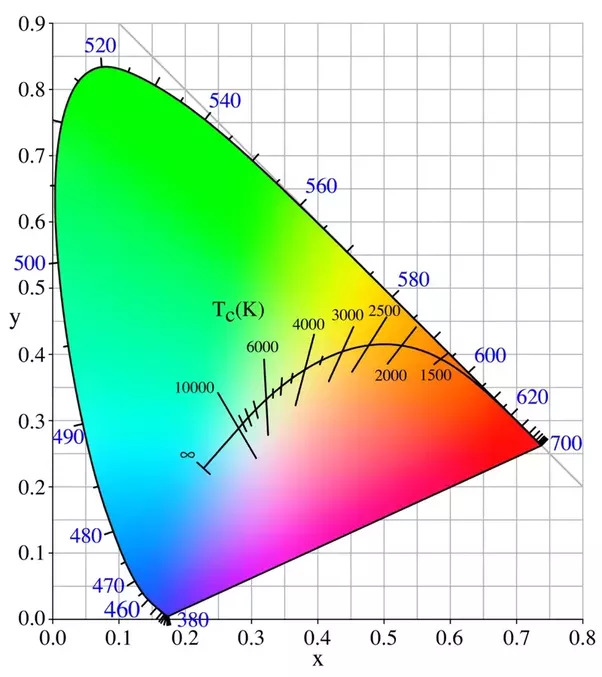
The electromagnetic spectrum forms at the heart of the perception of color. It is not an attribute inherent to matter. It is a phenomenon that is influenced by a range of influences. This includes light absorption and reflection as along with interference and emission spectrums.
Primary colorsThere's a long-standing history that explains the concept of primary colors. Isaac Newton was the one who first tried to establish primary colors. Isaac Newton used the term "primary color" to describe sunlight. Hermann von Helmholtz attempted another attempt. His idea was for a yellowish green.
These colors are the primary fundamental colors. These colors are vital to human vision. It is therefore crucial to know how these colors are created.
Be sure to consider any undertones that you may encounter when mixing paints. Avoid mixing colors that is dirty or muddy. The addition of black or white to a primary color can change the value and temperature of the color.
Secondary colorsSecondary colors are made by mixing a primary and an additional color. When you mix the primary colors with secondary colors it is possible to create endless shades of a specific color.
It can be very helpful using a traditional color wheel when selecting colors for your work. A color wheel can assist you to ensure your painting is well balanced and visually pleasing.
Using secondary colors can add the impact of your painting. This is especially true when you combine the secondary colors with the primary colors. As a result, you'll have stunning artwork that people will be enchanted by.
Knowing color theory will allow you to create your perfect palette. It also helps you reduce time and cost. You will be able to choose the right secondary colors for your artwork.
Aristotle's theory of colorAristotle's theory of color was an essential element in the development many scientific disciplines. Aristotle's book Colorology explores the relation between light, color and other aspects of life. Among other things, he explains the origins of colors, methods to color, and the relationships between colors and objects.
Aristotle believed that color was the realisation of transparent matter. That means that a human body can be colored only in the presence of light. Aristotle stated that this is not required for a body being colored. Aristotle argues that a human body is not colored if it's in an unlit space.
Aristotle's perception of color is that it is the ability to reflect light to the eyes. It is not a phantasm, as some seventeenth century philosophers may have believed.
Mixing AdditiveThere are a variety of applications for color additive mix, including silk-screening, printing and televisions. In general, additive colour mixing employs the primary colors (red-blue-or green) as the base and three to four spectral color light sources to create the desired colors.
A triad is created when the resultant color is combined with a different color. Designers can create many color combinations using this technique. The combination of red and green creates a color called brown.
Triads may be more intuitive than subtractive color mixing. It also involves different combinations of light spectral, as well as mixing models. Two lights should be put close together to begin subtractive colour mixing.
Newton's discovery of colorIsaac Newton's discovery of color is a major achievement in the history of science. But, the specifics are not quite as straightforward as they seem.
Newton was an Cambridge University student who spent much time studying the characteristics of light. He realized that light is composed of small particles. A series of experiments was carried out to determine how the particles behaved.
He looked at rainbows and concluded that when light travels through the prism, it creates the appearance of a rainbow. The rainbow is made up of a range of colours that are then refracted to produce white light.
He also wrote a complete book on the subject called the Book of Colours. His theories about color were explained in the book.
Color and learning effectsLearning is influenced by colors. While it might not seem as if there's a clear connection, it's. It is essential to think about the needs of students when choosing a color scheme for the classroom environment.
Research on the effects color has on learning is increasing. These studies focus on a variety of aspects of color like its ability to influence emotion as well as attention and retention.
A study has examined the cognitive performance as well as the learning environment effects of colour and achromatic colours. The findings suggest that effects of colours vary based on age and gender and that more complicated effects may occur when the color is more specific to the learners' cognitive abilities.
The color of a fire is critical in determining its intensity and temperature. The ordinary color spectrum of fire spans the range of relatively cool to very hot, which is represented by the acronym roygbiv in relation to the color spectrum: The blue flame is the hottest because it has the shortest wavelength of visible light.
However, Purple Is Actually The Hottest Color.
White fires, which range in temperature from 1300c to 1500c, are the hottest. The hottest color of fire is blue. The blue flame is the hottest because it has the shortest wavelength of visible light.
We Know From Viewing The Sky That Other Stars Have Colors That Range In The Visible Spectrum From Red To Blue, With The Red Stars Being.
Blue flames are also very efficient, meaning they burn fuel. While blue represents cooler colors to most, it is the opposite in fires, meaning they are the hottest flames. Before looking at the colors some fires will burn at a specific temperature and it is helpful to know the temperatures when looking for the color.
Blue Flames Are The Hottest, Followed By White.
The hottest fires are from oxyacetylene torches, which combine oxygen and gas to create blue flames.the temperature of a candle flame is determined by color.the candle. What is the hottest color sun? After that, yellow, orange and red are the common colours you'll see in most fires.
The Complete Fire Color Cheat Sheet.
It’s easy to make purple fire using common household ingredients. There are several very good answers in this thread…. This is because purple contains more.
Now That We’ve Explored The Different Colors And Their Temperatures, The Following Resume Can Come In Handy:
What colors can be found in fires? While sources vary somewhat, it is possible to construct a reliable enough chart showing the relationship between flame temperature and. Most fires are the result of a chemical reaction between a.