Skin Color Change Disease
Skin Color Change Disease. Often, skin conditions cause rashes, inflammation or other skin changes. High blood pressure and kidney problems sometimes result in a thickening of the skin on the shin, day said.
Color is a form of perception that uses the electromagnetic spectrum. It is not an attribute that is inherent to matter. It is a phenomena that is affected by a variety of influences. These factors include reflections, absorption, and light interference spectrums.
Primary colorsThe concept of primary colors has a long history. Isaac Newton was one the first to explain these colors. Isaac Newton referred to sunlight as "Primary color." Hermann von Helmholtz made another attempt. His idea was for a yellowish-green.
The three primary colors are red, green, and bleu. They are essential to our perception. This is why it is essential to know how colors are made.
Take note of any undertones you mix into paints. You don't want to create a look that is muddy or dark. The addition of black or white to a primary hue will change the value and temperature of the color.
Secondary colorsSecondary colors are created by mixing primary colors and secondary color. When you mix the primary colors and secondary ones you can make infinite shades of one color.
A traditional color wheel can be helpful when choosing the colors you want to paint. A color wheel will help make sure that your work is balanced and visually appealing.
Secondary colors can make a painting more impactful. This is especially true of secondary colors that are combined with primary colors that are appropriate. The result is a work of art that people will be amazed by.
It can help you make the ideal color scheme. It will also help you reduce time and costs. You can also choose the most suitable secondary colors to paint with.
Aristotle’s theory regarding colorAristotle's theory of color was an essential factor in the evolution of numerous scientific disciplines. Aristotle's book Colorology examines the relationship between light, color as well as other aspects of the human experience. Aristotle also explains the history behind the colors, the color techniques and the connections between the colors and objects.
Aristotle said that color is the reality of transparent matter. A body is only colored by light. Aristotle however claimed that this is not a necessary condition for a body to be colored. He claims that a human body isn't colorable if it is kept in a dark environment.
One way to comprehend Aristotle's theory is the fact that color is a substance that reflects light to the eye. This isn't a phantasm, as some seventeenth-century philosophers may think.
Mixing ingredientsPrinting, silk-screening, televisions and many other devices can be utilized to mix colors. The general rule is that additive colour mixing utilizes primary colors (red-blue-or green) as the basis , and two to three spectral colors lights to produce desired colours.
The resultant color can then be mixed with a different color to make the trinity. This allows designers the ability to come up with a variety of color combinations. For instance, a red, green and blue blend creates the brown color.
Using a triad isn't as intuitive as using subtractive color mixing. It also involves a variety of combinations of light spectral, as well as mixing models. When using subtractive color mixing, the first step is to connect two lights together.
Newton's discovery and the use of colorIsaac Newton's discovery and subsequent publication of the color theory was an important moment in the history of science history. But the details aren't always as simple as they appear.
Newton, an Cambridge University graduate, spent an extensive amount of time studying the properties, including light. He discovered that light is composed of microscopic particles. He conducted several experiments to discover the behavior of these particles.
He looked at rainbows and found that light can be created when it is passed through a prism. The rainbow is comprised of a variety of colors that reflect back into white light.
He also wrote a book entitled The Book of Colours. It outlined his theories on the color.
Learning is affected by the color ofColor's power can influence the focus and performance of students. Although it may not appear intuitive at first it is an obvious connection. It is important to consider the learners' needs for learning when selecting the color scheme of an educational setting.
A growing body of research is looking at the impact of color on learning. The research has focused on various aspects of color, like its capacity to affect emotion, attention, and retention.
A recent study examined the effects of colour and achromatic learning environments on students' cognitive performance. The results indicate that there are some differences in the effects of color on ages and genders, and that complex effects may occur when the color is more specific to students' cognitive abilities.
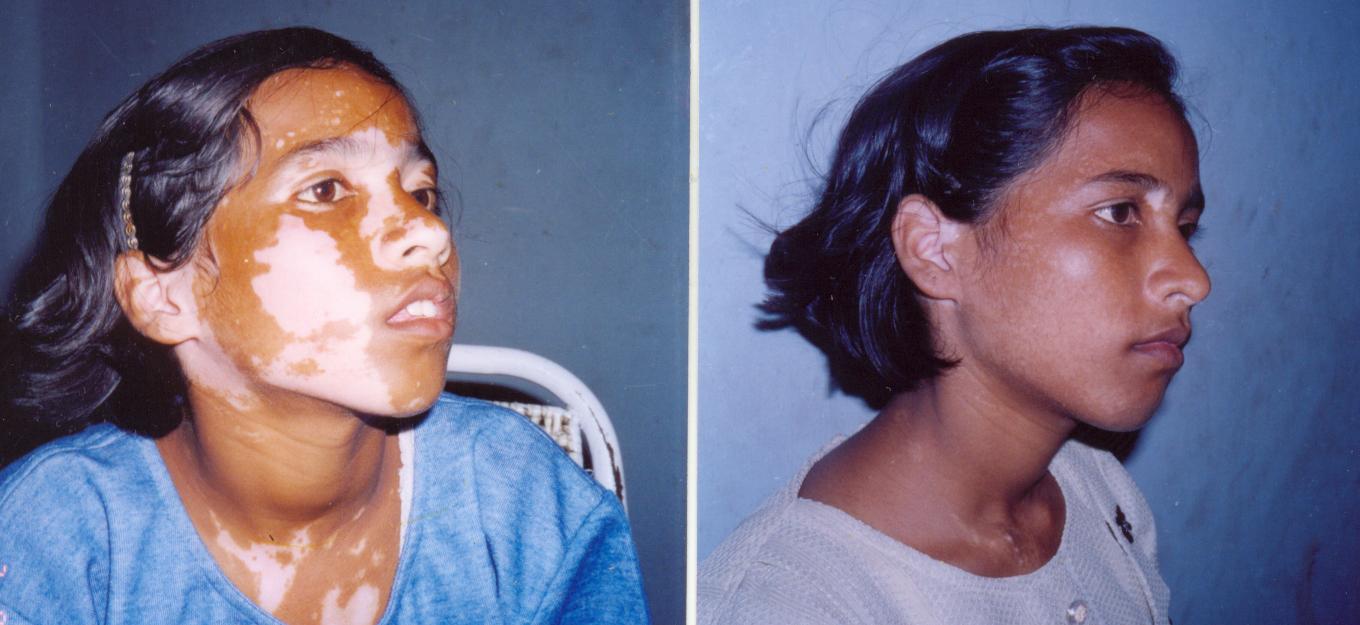
Web skin color changes can include red, yellow, purple, blue, brown (bronze or tan), white, green, and black coloring or tint to the skin. Web from the earliest days of the study of skin diseases, color has played a role, however erratic and incomplete. Web this is the most severe form of this type of skin discoloration.
Vitiligo Vitiligo Is A Disorder That Causes Patches Of Skin To Become White.
It happens because cells that. Web skin color needs to be factored in when discussing skin diseases by matt berger — updated on july 3, 2018 new programs are being started to educate. Web yellowish skin and/or the whites of the eyes.
Toes Or Other Body Parts, Causing.
Web learn the causes and treatments of this skin disease. Web these are a few questions that form the basis for what penn state anthropologist nina jablonski calls an explanatory framework of the evolution of skin pigmentation in modern. Some conditions that can restrict blood (and oxygen) flow and result in a bluish skin color.
From The Earliest Days Of The Study Of Skin Diseases, Color Has Played A Role, However Erratic And Incomplete.
Often, skin conditions cause rashes, inflammation or other skin changes. This damage causes the skin to change color. High blood pressure and kidney problems sometimes result in a thickening of the skin on the shin, day said.
Lighter Skin May Turn Red Or Tan, While Darker.
Skin can also become lighter or. Web changes of skin color due to diseases. Web certain skin colors may represent serious disease, including pallor (pale), cyanosis (blue), jaundice or icterus (yellow), gray, and hyperpigmentation (brown).
Bruises Or Areas Of Blue.
Web skin color changes can include red, yellow, purple, blue, brown (bronze or tan), white, green, and black coloring or tint to the skin. Web from the earliest days of the study of skin diseases, color has played a role, however erratic and incomplete. Web changes in skin's hardness and dryness.