What Color Makes Purple And Blue
What Color Makes Purple And Blue. The shades of purple and blue may vary but the resulting color will always be. If you mix purple and blue paint together, the resulting color will be a deep, rich violet.
Color is the visual perception of the electromagnetic spectrum. It is not an inherent property or property of matter. Instead, it is a phenomenon that is caused by several variables. The factors that influence it include light reflection and absorption as along with interference and emission spectrums.
Primary colorsIt is widely known that primary colors share a long history. Isaac Newton was one of the first scientists to define these colors. Newton referred to sunlight as a "primary color." Another attempt was proposed by Hermann von Helmholtz. His idea was to create a yellowish green.
The three primary colors are red, blue, and green. These colors are crucial for our eyesight. Understanding how colors develop is vital.
Be sure to take into account any undertones in your paint mix. You don't want to create an unclean or dirty color. Adding white or black to a primary color can change the value and temperature of the color.
Secondary colorsSecondary colors are created by mixing primary colors and a secondary color. Mixing primary and second colors can result in endless shades.
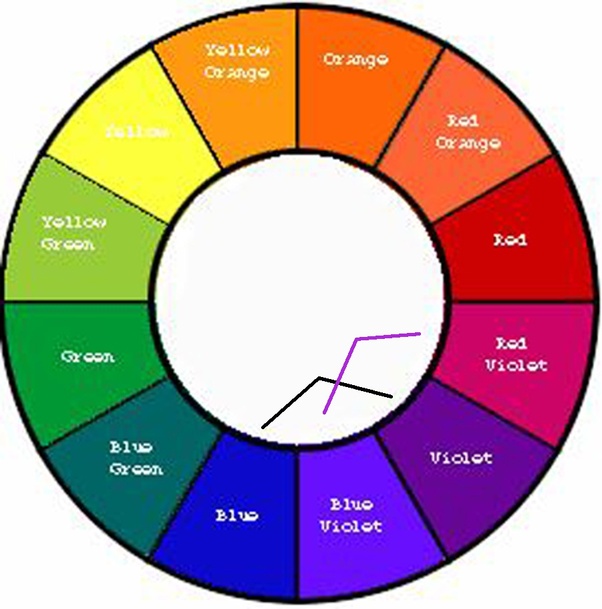
The traditional color wheel could be helpful when choosing the color scheme for your painting. It is possible to ensure that your work is well-balanced and pleasing to the eye by using a color wheel.
The secondary colors make paintings more impactful. This is especially true if you mix the secondary colors with the primary colors. In the end, you'll end up with a spectacular piece of art that everyone will be fascinated by.
Knowing color theory will allow you to create the perfect color scheme. It will also allow you to save time and money. It will help you choose the right secondary colors for your masterpiece.
Aristotle’s theory regarding colorThe theory of color developed by Aristotle is an important element in the creation of many disciplines in science. Aristotle examines the connection between light and color in his work Colorology. In addition Aristotle discusses the history of colors, the techniques used for coloring, as well as the connections between objects and colors.
Aristotle states that color exists in the world of transparent matter. The only way a body can be colored is when it is illuminated. Aristotle believed that the body doesn't have to be in the dark space to have color. He claims that a human body isn't colorable if it is kept in a dark environment.
The view of color held by Aristotle is that it's the ability to reflect light to the eyes. It is not a phantasm as some philosophers from the 17th century might have thought.
Mixing with additivesThere are many applications for color additive mix such as silk-screening, printing, and televisions. Additive color mixing generally uses primary colors (red or blue) as the basis and two or more spectrum-colored light sources to create desired colors.
A triad is created when the color is combined with a different color. This allows designers to develop different color relationships. A mix of red and green creates a color called brown.
It's more intuitive to utilize a triad rather than subtractive color mixing. It also involves a variety of combinations of light spectral, as well as mixing models. In order to subtractive mix colors, it is necessary to put two lights near each other.
Newton's discovery of colorIsaac Newton's discovery of color is visible is an important discovery in history science. There are many nuances that aren't as simple as they appear.
Newton, a man who had studied at Cambridge University (England), spent a lot of time studying the properties and applications of light. He realized that light is composed mostly of tiny particles. In order to determine how these particles behaved, He conducted a series of experiments.
He looked at rainbows and realized that when light travels through prisms, it forms the appearance of a rainbow. This rainbow is made up of a variety of colours which are then refracted to white light.
The author also wrote a book on the subject. It was called the Book of Colours. He outlined his theories on the color of the book.
Learning can be affected by colorColor can have a powerful influence on the attention of a student and performance. The connection may not be obvious at first but it is there. The needs of learners in learning should guide the choice of color scheme in educational settings.
Research is expanding on the impact of the color of a room on learning. These studies have examined various aspects of color like its capacity to impact attention, mood, and retention.
A recent study investigated the impact of colour learning environments as well as achromatic learning environments on children's cognitive performance. The findings show that colours have different effects on students according to gender and the age of their students. Furthermore, students who are more cognitively gifted might experience more complicated results.
More brilliant or vibrant purple shades need cooler shades of red and warmer shades of blue. Dark purple or light purple because pink and blue makes a purplish with more purple that'll make a type of purple The shades of purple and blue may vary but the resulting color will always be.
What Color Does Red, Blue, And Purple Make:
How to make shades of purple. Overall, ultramarine blue makes a dark purple, while purple mixed with cobalt blue will create a lighter shade of purple. Purple is created by mixing blue and red together, whereas blue is a base color.
What 3 Colors Make All The Colors On The Color Wheel?
When combining purple and blue, you must. It is similar to violet, but unlike violet, which is a spectral color with its own wavelength on the visible spectrum of light, purple is a composite color made by combining red and. Colors, as gorgeous as they are, have several intriguing characteristics that make them even far more fascinating to explore.
A Tint Is When You Mix Any Kind Of Color With White.
Using colors that sit close to each other on the color wheel is a great way to make a pleasing design. This means that these colors create a soft and pleasing look when used with each other. The ratio you will want to use is three parts blue to one part black.
So, Mixing Pink And Blue Will Give You The Color Purple.
The opposite of purple is yellow, so you can mix purple with. Color mixing is a playful way to make various shades. Blue is a primary color.
Blue And Red Are Essential To Creating Purple, But You Can Mix In Other Colors To Create Different Shades Of Purple.
There are a lot of different colors on the color wheel, and by combining them, you can make even. The colors that you will need to mix together to create dark blue paint are black, white, and blue. Purple and blue are mixed to create indigo.