What Colors To Mix To Make Purple
What Colors To Mix To Make Purple. Purple is made by combining red and blue light. Learn how to mix the perfect bright purple with acrylic paint colours with professional.
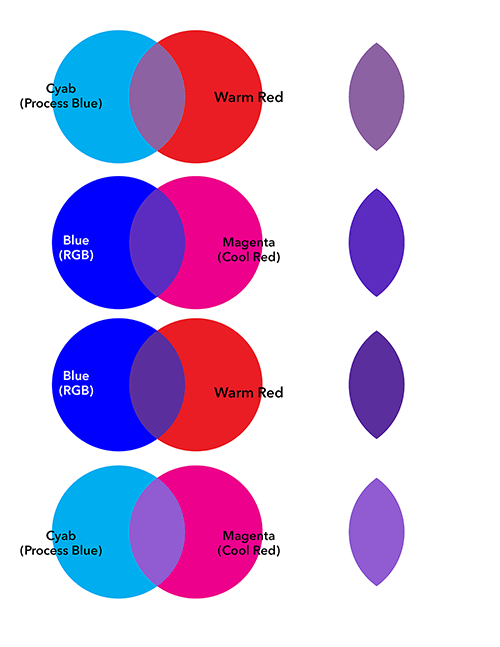
Color is a visual perception built on the electromagnetic spectrum. It is not a property that is inherent to matter. It is a phenomenon that is influenced by a range of influences. The factors that influence it are reflections of light, absorption, emission spectra, and interference.
Primary colorsThere is a long history that explains the concept of primary colours. Isaac Newton was the one who was the first to try to define primary colors. Isaac Newton called sunlight the "primary color." Hermann von Helmholtz made another attempt. His idea was for a yellowish green.
The three primary colors are red, green, and blue. These colors are essential for vision. Understanding the process that creates these colors is essential.
When mixing paints, be sure to be aware of any undertones. You don't want to create a look that is dirty or dark. The color's temperature and value will be affected when you add white to a primary color.
Secondary colorsSecondary colors can be created by mixing primary colors and an additional color. Combining the correct secondary and primary colors can create endless combinations of colors.
The classic color wheel can aid you in choosing the appropriate colors for your paintings. A color wheel will help ensure your painting is well balanced and visually appealing.
Secondary colors can make a painting more powerful. This is especially true if you mix secondary colors with the appropriate primary ones. You will create a stunning piece of art that will be awe-inspiring to all who see it.
Understanding color theory will allow you to create the perfect color scheme. It can help you save money and time. It will help you choose the right secondary colors for your masterpiece.
The theory of color of AristotleThe Aristotle theory of color is a major factor in the development and application of many disciplines in science. The work of Aristotle Colorology examines the connection between light and color. He also discusses the origins and methods of coloring and relationships between colors and other objects.
Aristotle holds that color is a reality of matter that is transparent. The only way a body can be colored is when it is exposed to light. Aristotle however, argued that this is not the only requirement for a body to become colored. He argues that a body is not colored if it's an unlit room.
Aristotle believed that color was a force that reflects light. This is how you can comprehend his view. It is not an illusion, as some philosophers of the 17th century might have thought.
Additive mixtureThere are numerous applications that use color additive mix which include silk-screening, printing, and televisions. In general additive color mixing, you use primary colors (red, green, or blue) as the basis, and at least two or more spectral colors to produce the desired colors.
The color that is created can be mixed with another color to create the trinity. Designers can create many color combinations using this technique. For example the red, green and blue blend creates the brown color.
Triads may be more intuitive than subtractive color mixing. It also requires different combinations of light spectral, as well as mixing models. When using subtractive color mixing, the primary step is to connect two light sources together.
Newton's discoveries about colorIsaac Newton's discovery about color is an important milestone in the history and science of science. The details may not be as simple as they appear.
Newton, an academic at Cambridge University in England, was able to spend a significant amount of time studying the properties of light. He realized that light is composed of tiny particles. He conducted a series of experiments to understand the behavior of these particles.
He conducted research of rainbows and discovered that the light passing through a prism produces the appearance of a rainbow. The rainbow is comprised of various colors. These reflect back into white light.
He also wrote a book entitled The Book of Colours. It was a summary of his ideas on color.
Effects of color on learningThe power of color could have a profound impact on the focus and performance of learners. It's not evident initially but it's evident. The color scheme chosen for an educational setting must be determined by the requirements of the students.
A growing amount of research is examining the effects of color in learning. These studies explored a range of aspects of color's power to influence attention, emotions, and retention.
A study that compared the effects of cognitive performance of students learning in achromatic and color environment was released. The findings show that colours have different effects on students according to gender and the age of their students. Additionally, learners who have a higher cognitive capacity might experience more complicated effects.
Try mixing equal parts to create a pretty deep purple. The drops of dye needed will slightly. Blue plus red plus yellow equal brown.
Again, Start Out With Your Basic Recipe For Creating A Base Purple, And Add Red A Little Bit At A Time.
The ratio of each is up to you, but a 50/50 split will create a nice rich shade of purple. As you can see on the color wheel (click on it to make it larger), violet is the warmest possible “blue” you can get. By mixing purple with a color that is light in value!
To Make The Color Dark Purple, Add In 30 Drops Of Blue Food Coloring With 130 Drops Of Red Food Coloring.
These days purple isn’t as hard to make. 1 a brief history of the purple hue: The first way to get a.
So, Your Tubes Of Blues And.
1.2 the color purple and china; You can easily make the light shades of purple: Blue plus red plus yellow equal brown.
The More Extreme Each Of These Are The Brighter The Purple.
This can be done in different proportions to create different shades of purple, from a deep, rich hue to a light lavender color. Blue and red are essential to creating purple, but you can mix in other colors to create different shades of purple. Puce is a dark red shade with a hint of purple.
The Drops Of Dye Needed Will Slightly.
What colour do you mix to get purple? Let’s try mixing cobalt blue and primary red! Adding white, yellow, or gray to your mixture of blue and.