What Causes Leaves To Change Color
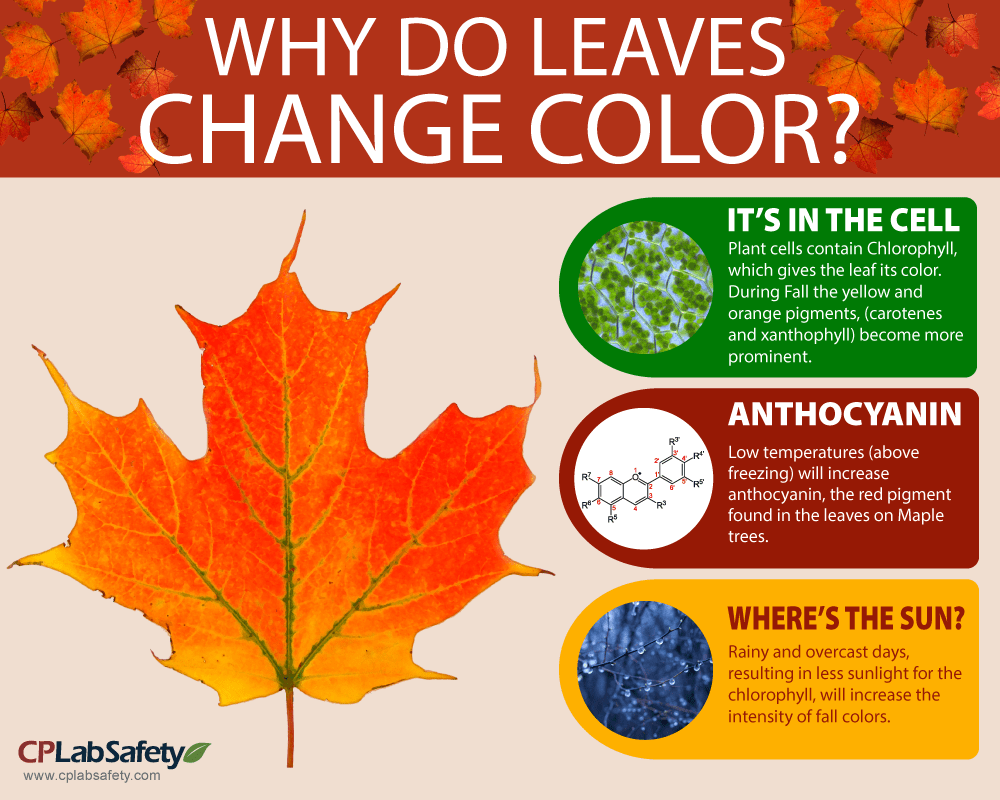
What Causes Leaves To Change Color. Temperature can induce or accelerate those changes. The lack of chlorophyll reveals yellow and orange pigments that were already in the leaves but masked.
Color is the visual perception of electromagnetic spectrum. It is not an inherent characteristic of matter but something that is influenced by a variety of variables. These factors include light reflection and absorption as along with interference and emission spectrums.
Primary colorsThe history of primary colors is long. One of the first attempts to define primary colors came from Isaac Newton. Isaac Newton called sunlight the "primary color." Another attempt was proposed by Hermann von Helmholtz. His idea was for a yellowish green.
Blue, green, and red are the main colors. They are essential to our perception. Understanding the process of creating these colors is essential.
When mixing paints, be certain to consider any undertones. You don't want to produce a muddy or dirty color. By adding black or white to a primary hue will alter the value and temperature of the color.
Secondary colorsSecondary colors are created through mixing a primary colour with a secondary. You can make infinite shades of a color by mixing primary and secondary hues.
If you are deciding on colors to paint, a traditional color-wheel is helpful. By using a colour wheel, you will be able to ensure that your artwork is well-balanced and pleasing to the eyes.
The painting will be more interesting if you use secondary colors. This is especially true for secondary colors mixed with the appropriate primary colours. It will be a stunning piece of art that will captivate people.
Knowing the theory behind color will help you create your perfect color scheme. It also helps you save time and money. You can pick the best secondary colors to your art.
Aristotle's theory on colorAristotle’s theory regarding color is a major factor in the development and implementation of many disciplines in science. In his book, Colorology, Aristotle explores the relationship between light and color. He talks about among other topics, the origins and techniques of coloring as well as the connections between objects and colors.
Aristotle holds that color is the reality of transparent matter. A body is only colored in the presence of light. Aristotle said that this is not necessary for a body being colored. A human body is not able to be colorized in a dark place, argues Aristotle.
Aristotle believed that color was a force that reflect light. This is how you can comprehend his thought. This isn't an untruth like some philosophers of the 17th century could have thought.
Additive mixtureThere are a variety of applications for color additive mixing include silk-screening, printing, and televisions. Color additive mixing typically uses primary colors (red or blue) as the basis and two or more spectrum color lights to produce the desired colors.
A triad can be formed when the color that results is combined with another colour. This allows designers to design different color relationships. This is the way a mixture of red, green blue, and blue can create brown hue.
A triad is more difficult to grasp than subtractive colour mixing. It involves a variety of spectral combinations and a mix model. The initial step in subtractive color mixing is to set two lights near to each other.
Newton's discovery of colorIsaac Newton's discovery in color is a major event in the history of science. However, the facts aren't quite as straightforward as they might seem.
Newton An Englishman, who was a student at Cambridge University, spent much of his time examining the properties of light. He realized that light is composed of tiny particles. He performed a series experiments to see how these particles behaved.
He studied rainbows and discovered that light is created when it passes through a prism. This rainbow contains a number of colors, and they can then be refracted back into white light.
He also wrote a book about the subject, called The Book of Colours. The book outlined his theories about the color.
Learning effects of colorA learner's ability to concentrate and perform well is affected by color. While it might not seem as if there's a clear connection, there is. It is essential to think about the learning needs of learners when selecting colors for the classroom environment.
A growing body of research is examining the impact of color on learning. These studies have focused on various aspects of color including its ability to impact attention, mood, and retention.
A recent study looked at the impact of colour learning environments and achromatic learning environments on children's cognitive performance. These findings show that color effects differ based on age and gender. Additionally, more complicated effects can occur when the colour is more specifically designed to enhance the cognitive abilities of the student.
These changes can influence the shift in color to occur. Does cold weather make leaves change color? How does weather affect leaf color?
During Winter, The Days Get Shorted Affecting The Amount Of Sun The Leaves Are Exposed To.
Leaves change color because they are hungry…sort of. To feed the shiny green leaves that make shade, trees use sunlight to convert water and carbon dioxide into sugar. The rainbow of autumn colors.
Trees Get Less Direct Sunlight, And The Chlorophyll In The Leaves Breaks Down.
This causes the leaves’ green pigment to become less dominant, and gives other colors an opportunity to be displayed. In temperate regions, the length of daylight decreases as summer turns to winter. Chlorophyll is the pigment that gives leaves their green color.
The Main Reason That Leaves Change Colors Has To Do With The Change In Weather.
Heavy wind or rain can cause the leaves to fall before they fully develop colour and cold temperatures can weaken the vibrant colours. What causes leaves to change color? Does frost make the leaves turn color?
Light Energy Is Used To Make.
The internal trigger that causes leaves to change color is the shortened day length. Chlorophyll makes food for plants. Chlorophyll is very important for plants.
But Warmer Weather Can Create A 'False.
The more favorable warm, sunny day/cool night temperature cycles that occur in early autumn, the more likely that fall season is to experience vibrant colors with lots of reds. Low temperatures still above the freezing point help to produce anthocyanin, which produces a bright red color. Temperature can induce or accelerate those changes.